Showing posts with label Karrier. Show all posts

Thursday, 4 July 2024

Late model differences


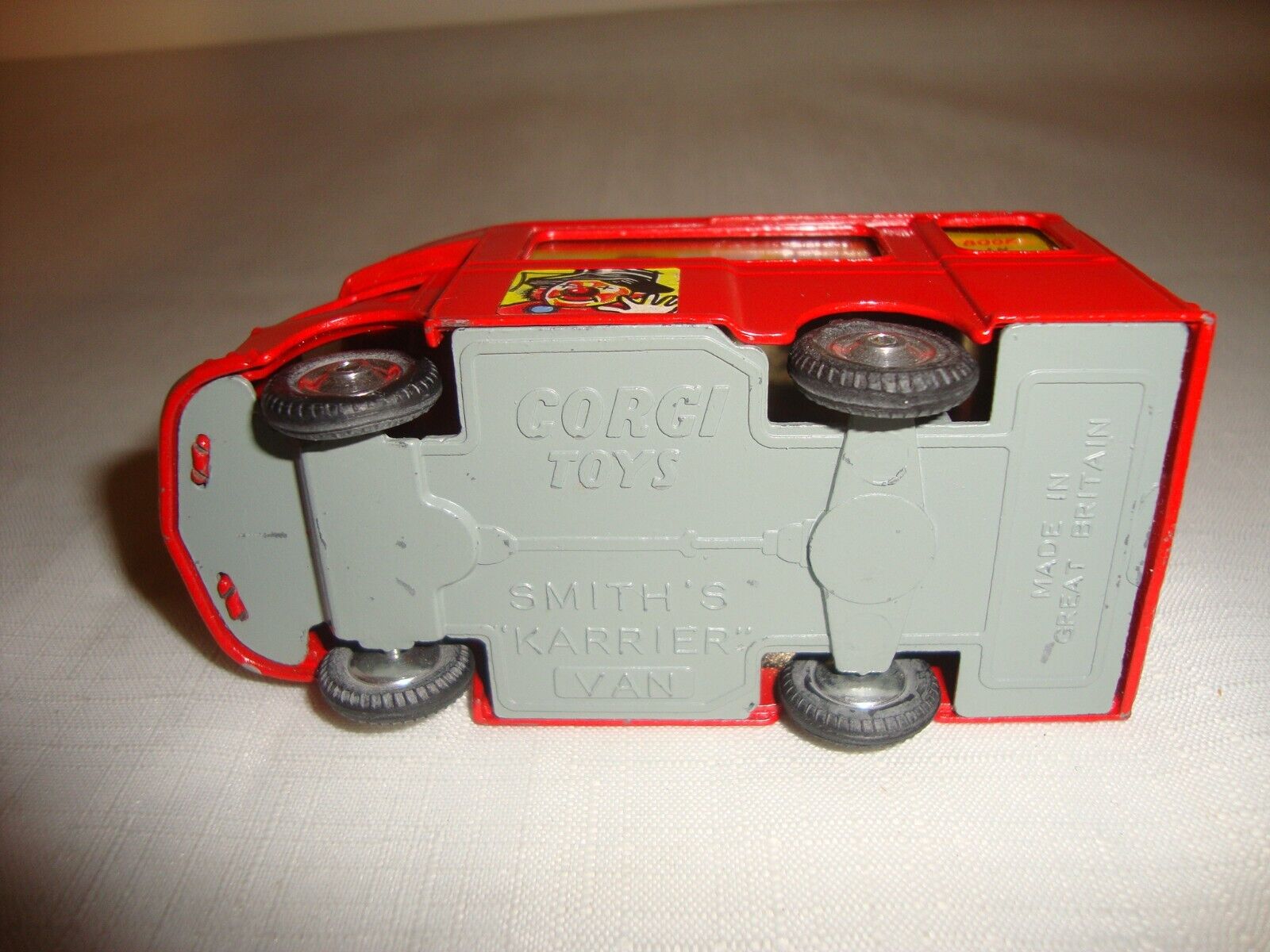
A 413 Mobile Butchers Shop came this week and prompted me to write about the small but important differences that you may find in models issued at the very end of their production period. The Karrier is a great example as it must have looked so dated on the shelves in 1964 and to discover that there was actually one of these old things with suspension was quite a surprise a year or so ago when I first found one. I now see that there is a reference to 413S in some Corgi documents although the boxes still read 413. This is certainly a rarity.


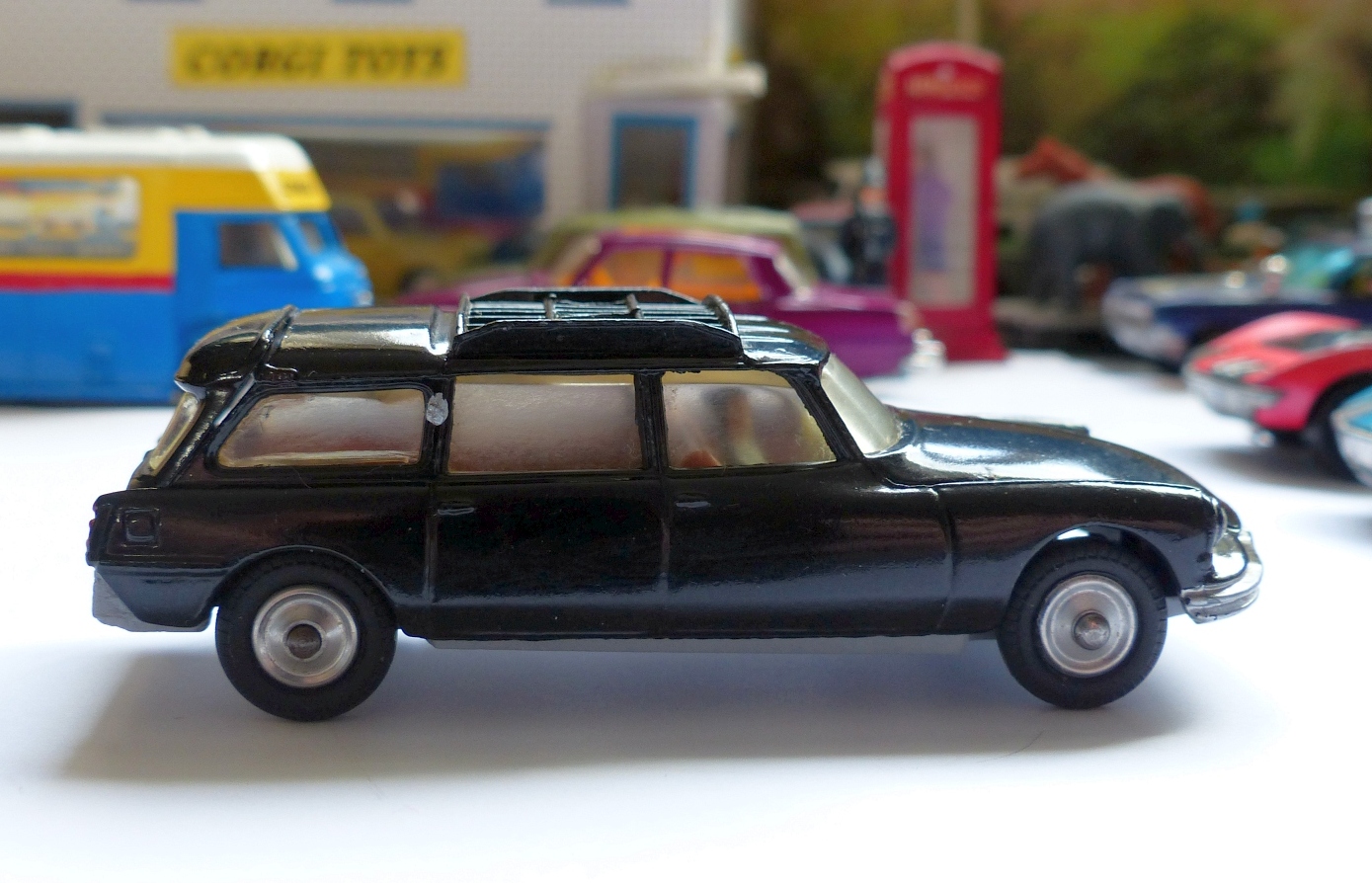
Another scarce one is this 210S Citroën DS19. It seems that Corgi decided to continue to produce these after having adjusted the casting for the 1965 Monte Carlo version to provide holes for the four small jewelled fog lamps. Instead of fitting jewels, though, we get some bright metal blobs instead. I have seen these fetch £150 or more at auctions but they do seem to appear regularly and maybe are not as scarce as I had originally thought. I now have four in stock although this latest addition is by far the best. Interestingly, only these models with the fog lamps have free-spinning wheels.


Free-spinning wheels are the difference on this late edition 223 Chevrolet Impala. It was a popular model, the very first Impala issued, in fact. and stayed in production for a long time before being sliced in half for the MkII version. Shortly before that some models got free-spinning wheels fitted but these are not at all as common as you might expect.


Corgi started fitting the shaped wheel in place of the smooth wheel in 1961 and some of the later editions of the 207 Standard Vanguard had them fitted. They also made another change that people may not have noticed, however, and that was in how the red paint now only covered the roof, not the pillars. Although shaped fixed wheels are less common on many models from this period (205, 209, 213, 214, 215 and 216 can be found, and 210 is common) only the 207 had this additional change.


Whilst late Buick Rivieras with cast wheels in metallic blue are quite common, and you find a few gold versions too, the pale blue Buick with cast wheels is very rare.


Wheels, again, are the thing to look for on the innocent and ancient-looking Jeep FC-150. This long-running model first appeared with fixed smooth wheels and the vast majority that you'll come across will have fixed wheels of one type or the other. Very few do exist, though, with free-spinning wheels and are worth picking up when you do see them as it is not something that sellers will realise is rare at all.


The penultimate one for now is the maroon Rover 2000 with cast wheels. Together with the equally rare gold Hillman Imp with cast wheels, it was produced for a Car Transporter Gift Set 41/48 which also featured the more common grey Ford Cortina Estate, Morris Mini Minor and Mini-Coopers all with cast wheels. Incidentally, a blue Cortina with cast wheels is also a desirable model.


Here is the Hillman Imp, which I had omitted from the article when first published.

There are, of course, many more models I could write about in a similar vein. I may return to this topic in another post. If you have any particularly interesting and rare late variations do let me know.

Sunday, 18 December 2022

Bags of Karriers


A collector recently alerted me to something I had not noticed before and this led to a surprise discovery for me. This is the 413 Karrier Butchers Shop with suspension. I had no idea this existed. This and the 407 Mobile Shop look so ancient that I had assumed they both preceded suspension but, no, it seems that the very late editions of the Butchers Shop did get suspension and this example has just arrived to prove it. It did not, though, get a 413S catalogue number, just stayed at 413, rather like the Chipperfields Crane Truck which just gets suspension somewhere along the line without any special announcement or change of number. 


I did find this standard box with 413 printed and an S label affixed on one end amongst items sold by QDT but it is the only reference to 413S that I have seen, the blue and yellow boxes being unillustrated and just having 413 printed at the end. The blue boxes are illustrated but would, I believe, have ceased production some time prior to the suspension models being available. My guess is that teh S label was added by a shop (or even a collector) rather than the factory. If more turn up with the same S label then I might be persuaded to change my mind.


The 407 and 413 models have an array of base types.


The first was the black base with one river and the text had the word SHOP.


Next, I think, comes the same type of base but in grey. This switch from black to grey happened with quite a few models - the 208M Jaguar, 207 Standard Vanguard (and its RAF version) come to mind and maybe there are others.


Then there is a grey base without a rivet but with twisted metal fasters and the text now has an overlay of VAN.


The 426 Chipperfields Booking Office has the same type of base as the 413 with suspension - very similar to the previous type but without any holes at the axles.


471 Joe's Diner has the same base again as the 413 with suspension and the 426 but with a rivet at the front and the two metal fasteners are not twisted to secure the base. It also has free-spinning wheels which teh others didn't get.

As far as I can see so far, all the 413 with suspension, 426 and 471 models have the same type of base. I think we will also find that all the 413 models with fixed shaped wheels will have suspension but I have yet to confirm that and may still come across a model with shaped wheels and an earlier base style which will not have suspension.

The 407 Mobile Shop appears not to have had the last type of base but I would not rule it out completely as it would seem that the suspension base was brought in at the beginning of 1962 when the 407 was still available. The question is whether is was still in production then. It might also have had shaped wheels fitted although that seems unlikely as the first Chipperfields Booking Offices still was being fitted with smooth wheels when first produced in January 1962.

If we take it that the suspension bases were all fitted at about the same time then that would be midway through the 413 period of availability. However as records show that a quite low number, around 100,000, were sold, it is unlikely that there was a demand for any more to be produced after the initial stock runs for quite some time and that could explain the scarcity of the suspension model.

Here are the dates when these models were available to be ordered:
  • 407  9/1957 - 1962
  • 413 10/1960 - 1964
  • 426  1/1962 - 1964
  • 471  3/1965 - 1966


Friday, 13 May 2022

The Professor's 'Prototypes'


Updated 15 May with new information


Professor Cary Nederman from Texas A&M University has sent me these three models. He bought them some years ago at an auction and, for some reason, has been staring at them recently and wondering just what they are. In desperation, he turned to me and wrote at length about them but without images. I suggested that it was unlikely that they would be Corgi factory prototypes but the Professor was determined to find out and, without further ado, dispatched them at great cost via UPS to my address here in a small village in Northamptonshire, where they arrived earlier today.

I decided to publish my comments on these items as they may give some assistance to others who think they have something original which may not be. 


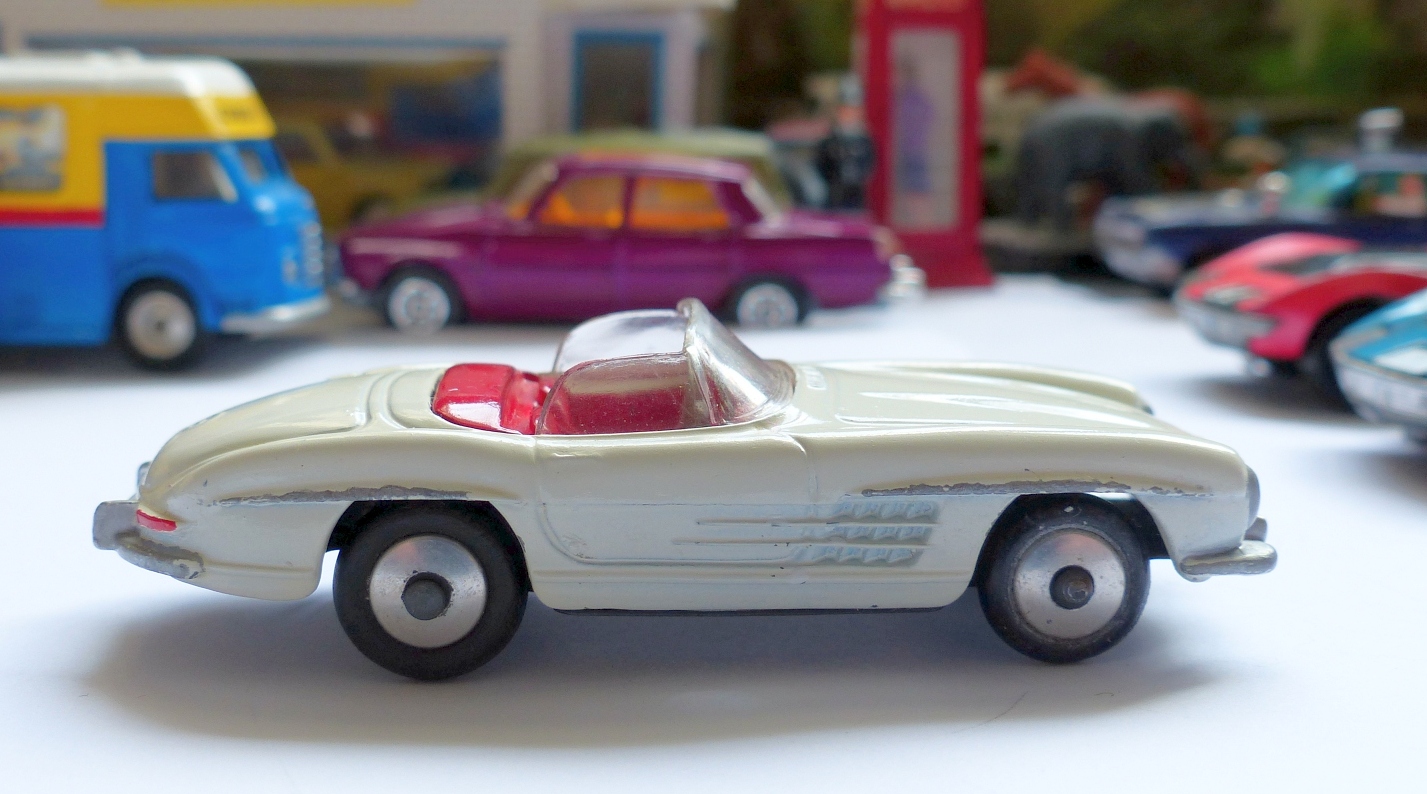
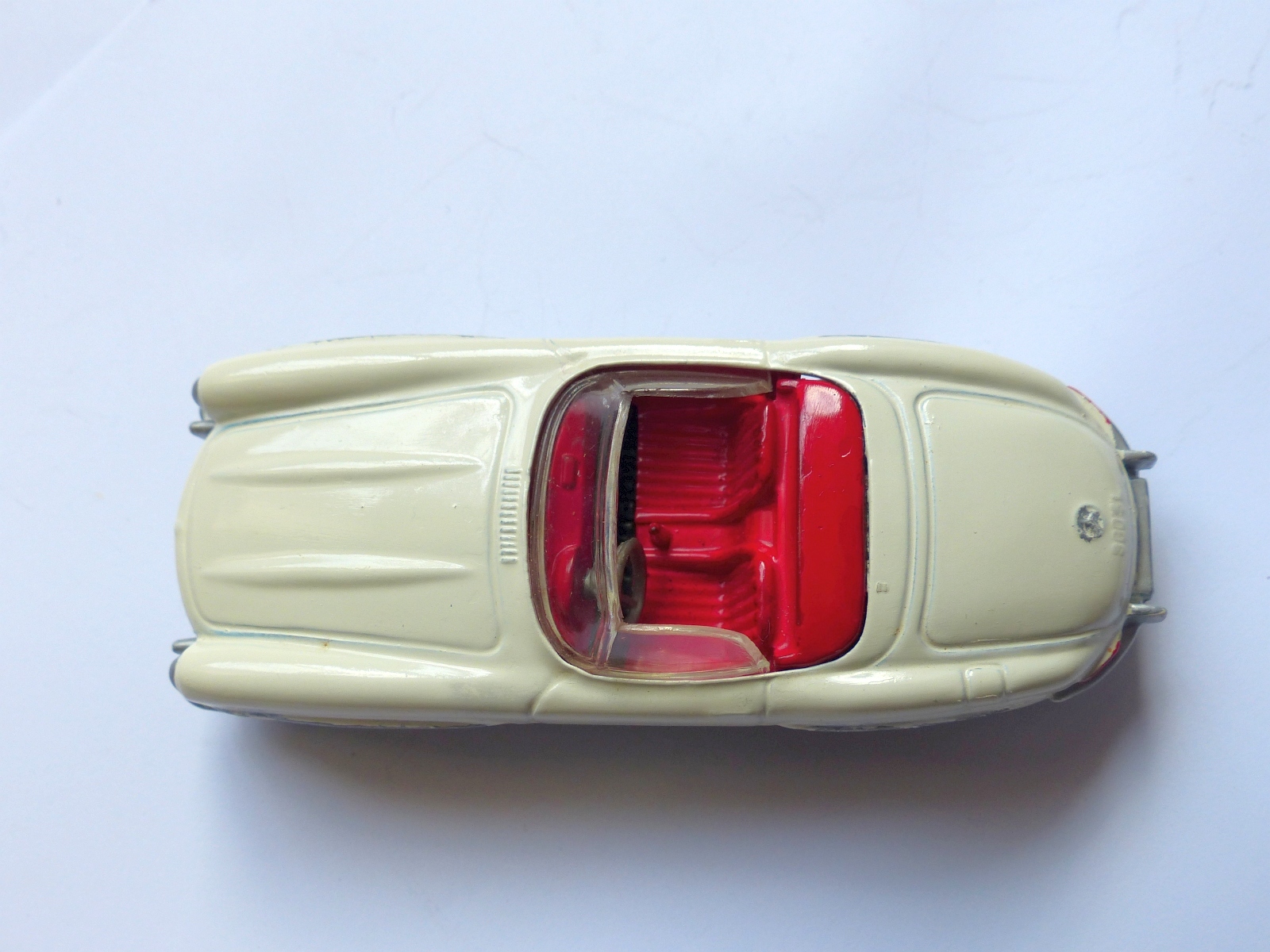
The first item is this white 303S Mercedes-Benz 300SL Roadster. It looks attractive in white with a red interior with the smooth but free-spinning wheels only to be found on this model.


It's missing a stripe but then early models with suspension didn't have the stripe so it sounded like an interesting item worthy of closer inspection.


Unfortunately, there are three things which make this something someone has created at some later date.


The rivet is usually the first thing to look at. Here you can see it is shiny and quite new-looking, and not really like any of the type of head that you will see on this model. It looks to me like one of a type that you can buy in packs of 100 from a replacement parts seller. I haven't tried but I suspect that a sharp knock horizontally might even dislodge it as these are usually glued in place.

The second is the overpaint of silver on the base. That's a sure-fire sign of something being amiss, although you also need to accept that someone may just have tried to touch up some paint on an otherwise original model.


The third sign, though, is more definite and shows some rather poor preparation of the original seating until before the red was applied. Not good and, coupled with the rivets, I was quite disappointed with the chap's work, whoever it might have been.

Next we have the almost famous Citroën hearse.


It looks fairly reasonable at first glance.


The rear window looked a bit odd to me and I thought it was a replacement. When it arrived there was what I had thought was glue around it too but, after cleaning, it does seem OK after all and this image just catches it at a bad angle. Of more concern, though, was the distinctly unclear windows pretty much all round. This strikes me as either a poor replacement or, more likely, someone has tried to clean an old unit and not used the best of solvents. Not obvious in these photos but the rear side window on one side is not well-fitted either, leaving a gap at the top I have never recalled noticing on any other of these models.

So my suspicions are aroused quite quickly. The finish on the paintwork is reasonable but the red paint has been added in a different design to that on the factory prototype. That has three distinct blobs of paint on the rear light section. This has the whole sections painted red.

Furthermore, the driver is a uniformed character which I believe I have seen in the early editions of the London Transport Gift Set taxi. My understanding is that the factory prototype had another character, not this one. I have not got a good copy of any image, however, so I am not sure about that. Hopefully someone will advise further, please.

There is also no coffin, although I can accept that it may have slid out and away into some box never to be seen again. This, however, is another fairly amateur production and I suspect that the creation of a suitable copy of the coffin was beyond the skills of this model builder, judging by his standards of window fitting and cleaning.


and, of course, we only have to turn it over and see the silly rivet heads anyway!


Nice grey paintwork on the base, though. Credit where credit is due. Below may be a picture of the actual prototype. I am not totally sure of its provenance, though.


Now for the star of the show. Page 77 of The Great Book Of Corgi has an illustration of the prototype that the factory made in 1959 of a 'Playcraft Promotion' van.


This looks great, from all angles.


The paintwork is very well-done and it has a much more professional air about it than the previous two. My suspicions have already been aroused, though, by them so, if they all came from the same source then it is highly likely that this, too, will be a Code 3 production by someone sometime. I need to gather some evidence, however.

I'll start with the tyres.


They are new replacements from a parts supplier that I have used before myself. Annoyingly, they come with those tiny bits of rubber attached to the tread. No factory production would have had these. However, we must allow for the fact that someone may have simply replaced them on an original model. So what else can I find?

Let's look at the base.


This time there are no rivets, just the twisted spurs which were used on a few models - notably the Ecurie Ecosse Transporter. One would have expected to see some damaged to the grey or blue paint had these been twisted to seal the base after fitting. I can only detect the feintest of marks. The grey paint is excellent but then it was excellent on the Citroën too.

So I need more evidence about this one. 

After a lot of searching I found some that had been sold by QDT and Vectis.


The QDT one made £100 and was described as a good copy of the prototype but with a different illustration in the window. Unfortunately for the Professor, his has the same illustration! His also has some display in the rear window, however, missing from the QDT illustration. There are also differences in the rear light painting, his having none, probably more accurate than the red and orange of this one, which would have been unlikely in 1959 when the prototype was said to have been made.


Above we have two of the Vectis offerings. These both have text along the red stripe at the side and each has a different display in the windows with nothing at the rear. You really would have expected people who go to the trouble of getting the paint right and lettering, transfers positioned well and all that to get the displays right! Painting three, sorry, four colours this accurately would not have been easy.

Finally, there is another problem with the Professors' edition. The wheels, not to mention suspension. His is a 426 Chipperfields Booking Office that has been revised. All the other copies of the prototype have been 407 Mobile Shops. If the prototype was supposedly envisaged and made in 1959, as QDT say the book says, then the 1962 Booking Office would not have been available. Nor would shaped wheels. Or suspension. Sadly, therefore, despite looking rather better on display than any of the copies I have found, it's wrong on at least three counts.

Update 15 May:

I contacted the person who bought my copy of the Great Book of Corgi (2nd Edition) and this has been most valuable. Firstly, the illustration.


It is immediately obvious that neither the QDT nor Vectis auction items were really anything more than rather poor efforts and I was wrong about the 407 being used as a base for the prototype. It just goes to show that you simply cannot rely upon the comments by even the auctioneers who specialise in Corgis! To be fair, Vectis did only sell their copy for £15 but QDT appear to have convinced someone to part with £100 plus not insubstantial fees for something which was quite wrong!

So we can see that the prototype illustrated by Marcel Van Cleemput was, indeed, based on a 426 Chipperfields Booking Office and it appears to have free-spinning wheels, unusual for that model and this was certainly made rather later than 1959. It would appear that people have been confused by the reference to 1959 as when the Display Van was first used at places like Silverstone Race Course (where, coincidentally, my contact for the book had been in charge of the place and may well have agreed to the Corgi promotion there too!) The construction of that prototype would have been somewhat later and that means that the Professor's model is much more accurate than I had appreciated.

It doesn't need the lettering on the red strip and the colours are accurate. Yes, the wheels are still not right but they're close enough for the copy to have some value. We can see that the window display is not correct but none of them have been. So, yes, it is wrong on a few counts but not as badly wrong as I had first envisaged.

So I am going to have to report that these are all copies, made by someone with some skill, certainly in the case of the Karrier Van, rather less so in the case of the Hearse. In this instance I believe the Professor agreed that I would be free to do what I wished with each of the models as he would not want them back and the cost of return, even at the rather more modest method I would employ, would be pretty much equal to the value of two of them. So, once I have finally concluded this bit of investigation, I may have these available for sale. The Karrier does look good, albeit with the slightly wrong wheels, and the Mercedes is an interesting item to add to a collection of those models. The Hearse will always attract attention too if someone cares to put it on their shelf one day.

In the meantime, if anyone has some good pictures of what the other actual prototypes looked like, do let me know. It would be helpful when I reply to break the news to my colleague.

Another update: from someone who knows about these things:
The top model was first reproduced by a very well know restoration specialist here in Sussex, Alan Morris. He did less than 10 examples and they are very nicely done. The colours of his examples are very true to the original, but the pictures inside of course aren’t the same as the original prototype. I’ve sold two over the years (not mine, it’s in the Museum on display) and they fetched £75-100 each, so there are collectors willing to pay for unusual examples of unissued models.

Thursday, 1 October 2020

Corgi Toys @ 60: new models, revamped models and a launch ramp.

Here are the new items on the shelves at your local toy shop in October 1960. Quite a selection! I guess this might have been some sort of planning for Christmas too as no further models were apparently released that year.


The first is the launch module for the Corporal missile. It's a highly detailed and wonderfully well-engineered little thing, with stabilisers or feet which screw down individually to ensure correct positioning on uneven surfaces. The wheels can be removed and the support arms fit into grooves on the side of the missile. It has a tow bar and would usually be pulled along behind an International Army Truck with which it appears in Gift Sets. This item would in most instances have been obtained in one of the Gift Sets with the missile and maybe with the Missile Carrier vehicle too so it is unusual to find it in its own box these days. Very few were sold individually, one in a good box now being well worth getting hold of.


Another Corgi Major and the first Chipperfields Circus model arrives in the shape of the International Truck now with a re-worked rear section that carries a jib. Compared to the army models this is rather basic and crude engineering. The jib is bare metal and raised by hand in three steps on a simple ratchet device. There's a large and not very pretty handle to lift or drop the hook.

The six wheels are now painted Circus blue and the old truck gets an extension to its life. Indeed, it will even get suspension later, which the army version never does.


Amongst the commercials Corgi produced another Bedford CA Van with a single screen and revised front end, appropriately bearing Corgi Toys transfers. It gets a new catalogue number, 422, following on from 421 for the Evening Standard version. To the confusion of children then, but much to the delight of collectors now, Corgi seemed to be unable to make their mind up for some time as to where the blue should go and to what extent. So you will find this half-and-half model as well as one that is blue but with a yellow roof and another that is yellow with a blue roof.

The last combination is the one that is by far the most common, the other two being really quite expensive to acquire now. Indeed, I have had to steal a photo of the 50-50 edition from QDT as I have always been beaten in bidding to date and it has not turned up in any collections I've handled.


The wheels are usually smooth on these models and, from my research, exclusively so for the two less common types. The yellow model with a blue roof has shaped wheels on its later issues.


418 is the Austin Taxi. It appears here for the first time in an extremely long run as it will stay in the catalogue right through to the 1970s when a 1:36 scale version eventually replaces it. I think that makes it the longest-running model without a change to the body. Land Rovers and Minis have a good life too but they get quite a few adjustments made along the line. The Austin Taxi stays just as it was in October 1960, getting only different wheels, interior colour, screen tint and a couple of drivers at various points.


Another commercial and another outing for the Karrier Bantam, now as 413, a Mobile Butcher's Shop. It's very similar to the 407 Mobile Shop, little changing over three years and this has the same style of metal with illustrations visible at the rear and paper stickers at the side and front. Early editions have smooth wheels, later ones have shaped wheels, all fixed.


Two cars are issued too this month - the TR2 gets a re-worked front end and becomes a TR3. It is always in a pale metallic olive-green with red seats. Early editions have smooth wheels and later ones shaped wheels but always fixed. Although production continued for some years I don't believe any got free spinning wheels.


The final items on the October agenda is the revised Jaguar 2.4 Litre, now as 208S and with an interior, suspension and a coat of pale yellow paint. Again, early editions have fixed smooth wheels and later ones fixed shaped wheels. This doesn't get free spinning wheels.

Friday, 11 January 2019

Corgi Toys @ 60: Karrier Airfield Radar Van and a Fire Chief's Car


January 1959 sees an interesting addition to the military items. A Karrier cab is put into use with various contraptions on the back to make an Airfield Radar Scanner Van. I suspect this might not have been a common sight on our roads then but it would have made a nice display item on some green baize or just plonked in a corner of the carpet.

The rear aerial is a plastic affair which can be re-positioned but the main attraction would be the scanner unit - a quite heavy chunk of mazak which can be turned pretty rapidly using a wheel on the side which connects to some gears to speed up the action.

Illustrated here is a 4-stripe version. It is also found with 5 orange bands. I don't know which are less common. Lasting until 1961, this can be found with both smooth and shaped fixed wheels.


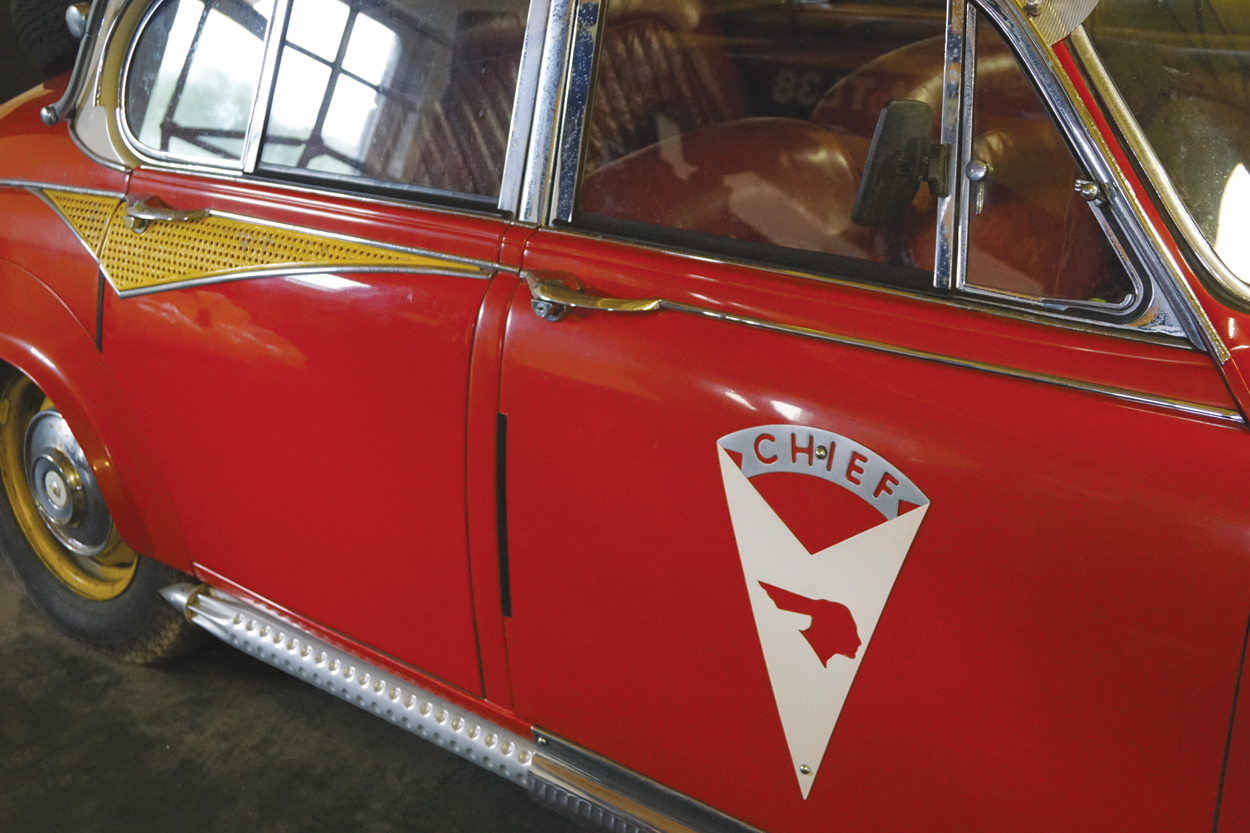
The other release at the start of 1959 was the Jaguar 2.4, now painted red and bearing the roof silverware previously seen on the Riley Pathfinder Police Car. Instead of 'POLICE' the sticker now reads 'FIRE' as this is a 'Fire Chief's' Car. This is another vehicle that I have to say I am not familiar with in that I did not spot any on the Hertfordshire streets where I grew up.


It seems to have existed, however, as this example of an item sold at an auction shows. It seems terribly American to me and I don't even recognise the logo on the door but I really have little clue about what the Fire Service was like in those days.

Both the Radar Van and the Jaguar have fairly short lives, disappearing in 1961. The Radar Van would never be seen again but the Jaguar gets suspension and an interior and lasts a little longer.

I believe all the 213 models will have smooth fixed wheels although the timing may well mean that some late editions got shaped wheels. They will be much scarcer, though.